
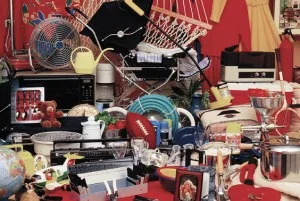
Your Garage – Auto Storage or Junk Closet
Garages have a variety of uses from a place to store your car, to a place for hobbies, but many people use their garages for storage for the many items they no longer need, taking up valuable space they could utilize for something better.

Garages have a variety of uses from a place to store your car, to a place for hobbies, but many people use their garages for storage for the many items they no longer need, taking up valuable space they could utilize for something better. Want less clutter, more space and even a few bucks to take a much needed summer vacation? Call an organization like Goodwill regarding gently used unwanted items to get a much needed tax deduction or have a fun family garage sale. It can be a very scary task at first glance but a few simple steps will make it easy and maybe even fun.
First, take stock of the contents of your garage and perhaps the closets and rooms throughout your home that are overfilled with junk and extra furniture and remove the items you no longer need. If you haven’t used it in a long time, you probably don’t need it. If you can utilize it somewhere else in your home, now is the time to make the change, otherwise let it go. Still can’t part with some items because you want to remember them forever? Take a digital photo and you’ll have the memories forever without all the clutter.
Next, do away with the dirt that surrounds all the clutter so you will have a clean slate to work with and find ways to better utilize the space in your garage. Purchase cabinets or clear plastic bins you can label to store items you need access to. Use ceiling joists to hang storage areas for items like bicycles and camping gear to give you more room to park cars. Be sure to use the joists and not hang anything too heavy for the hooks you use. Use small bins to keep items for home repair and craft projects easy to get to. Put items that can harm pets and children out of reach, such as tools, cleaning items, and chemicals.
Finally, have that garage sale and sell items for at least 50% less than you paid. People will try to bargain but don’t ask too much to start with or they won’t even be interested. Label items with removable stickers before the sale so there won’t be any confusion over pricing and have the kids help you make signs that draw traffic from the main streets near your home. Plan to have your sale when the weather is good and start early as most people that shop garage sales expect to be there early to get the best bargains. Plan to donate anything you don’t sell at the end of the day and you can still get a tax deduction for those items too. Post an ad for your garage sale on www.craigslist.org and anywhere in your community that might draw customers and tell your neighbors and friends to stop by. Enjoy the rewards…. a clutter free garage to park your car, a place to do hobbies, or just a few extra bucks in your pocket from getting rid of items better utilized in someone elses’s garage.

Keeping Kids Safe in the Car

No matter whether you are on a trip to the corner park, on a long drive to visit the family, or just parked at the market, the safety of the children in your car should be your first concern. Infants, toddlers, and school-aged children under 4’9” should be in an approved child safety seat or booster seat. Older children who have outgrown their booster seats should travel with a lap and shoulder belt and ride in the rear seat of the vehicle until they are at least 13. When the vehicle is parked, be sure not to leave children in the car as they can become trapped in extreme heat resulting in serious injury and/or death very quickly, When the outside temperature is a cool 60 degrees, even with the window rolled down two inches, the temperature inside the vehicle can rise above 110 degrees in a matter of minutes. A body temperature of 107 degrees is lethal and can happen quickly when subjected to extreme temperatures in the car.

Turn On a Greener Light to Save Money
Switch your light bulbs to compact fluorescents (CFL) and you will see clearly that you are saving money and helping the environment. Experts agree that if every American home replaced just one traditional light bulb with a CFL, the country would save more than $600 million dollars a year on energy costs.

Switch your light bulbs to compact fluorescents (CFL) and you will see clearly that you are saving money and helping the environment. Experts agree that if every American home replaced just one traditional light bulb with a CFL, the country would save more than $600 million dollars a year on energy costs. Compact fluorescents have been in use for many years and the results have been astounding. CFLs use 75% less energy, last up to 10x longer, and produce less heat. Additionally, CFLs can save you $30-$60 over the life of each bulb you install and help reduce the demand for electricity, thereby delaying the need for new power plants. Visit www.energystar.gov/cfls for more information.

Hands-free Driving
With an increasing number of states passing laws making cell phone use during driving illegal without a hands-free device, many people are left wondering why.

With an increasing number of states passing laws making cell phone use during driving illegal without a hands-free device, many people are left wondering why. Experts say that talking on the phone reduces the ability to concentrate on driving by 37% for adults and 50% for teenagers. If you aren’t paying attention to the driving task, you are much more likely to be involved in a traffic accident causing damage, injury or even death. The best solution, as recommended by the Insurance Institute for Highway Safety, is to make your calls when you are not driving. If you must make a call while driving, be sure to follow the laws and make driving the priority.

Green Gardening
Gardening is a fun hobby for enthusiasts and novices alike who enjoy the planting, nurturing and harvesting of the fruits of their labors.

Gardening is a fun hobby for enthusiasts and novices alike who enjoy the planting, nurturing and harvesting of the fruits of their labors. Imagine a beautiful work of nature that starts from a tiny seed and grows into a beautiful, natural work of art that can provide nutrition for your family and oxygen back into our atmosphere. You can even involve your kids to help you with watering and harvesting for fun family time.
To ensure your gardening efforts are environmentally safe, there are a few factors to consider.
- Plan – stick to what will grow in the climate and soil you have to work with
- Care – use rainwater when possible to water your plants and in areas facing drought consider planting things that don’t need a lot of water. Use organic fertilizers instead of manure (pasteurized chicken manure has less odor or a liquid made from fish and seaweed by-products)
- Control – most of the bugs in your garden are harmless and some are more beneficial than the pesticides you might use to control them. Hang bird feeders or nesting gardens near your garden to have the birds consume the bugs. If necessary, use an insecticidal soap which is hearty enough to kill pests but safe.
- Share – excess fruits, vegetables, herbs and flowers are great to share with friends, family and neighbors. You won’t have wasted a moment of your time or your harvest and others will enjoy your efforts.
- Recycle – leftover plant waste can be put into a composting bin in your yard to use as fertilizer or mulch for next season’s crop rather than taking up space in a landfill.

Composting
According to the US Environmental Protection Agency (EPA), yard and food waste together constitute 24 percent of the U.S. municipal solid waste that loads up landfills when it could become useful and environmentally beneficial compost.

According to the US Environmental Protection Agency (EPA), yard and food waste together constitute 24 percent of the U.S. municipal solid waste that loads up landfills when it could become useful and environmentally beneficial compost. Composting is very easy and the resulting organic material can be used as a soil amendment or as a medium to grow outdoor plants.
Natural composting is basically biological decomposition, and began with the first plants on earth and continues to this day. When vegetation falls to the ground and slowly decays, it provides minerals and nutrients needed for plants, animals, and microorganisms. Modern composting technology includes heat to destroy pathogens and weeds.
Composting is not only easy and a great way to keep our landfill space to a minimum, it can also suppress plant diseases and pests and reduce or eliminate the need for chemical fertilizers. Composting has been shown to promote higher yields of crops and in nature, is a cost-effective means to facilitate reforestation, wetlands restoration, and habitat revitalization efforts. It can also be used to remove solids, oil, grease, and heavy metals from stormwater runoff and capture and destroy 99.6 percent of industrial volatile organic chemicals (VOCs) in contaminated air.
Things You Should Compost
- Animal manure
- Cardboard rolls
- Clean paper
- Coffee grounds and filters
- Cotton rags
- Dryer and vacuum cleaner lint
- Eggshells
- Fireplace ashes
- Fruits and vegetables
- Grass clippings
- Hair and fur
- Hay and straw
- Houseplants
- Leaves
- Nut shells
- Sawdust
- Shredded newspaper
- Tea bags
- Wood chips
- Wool rags
- Yard trimmings
Things You Should Not Compost
- Black walnut tree leaves or twigs
- Coal or charcoal ash
- Dairy products
- Diseased or insect-ridden plants
- Fats, grease, lard, or oils
- Meat or fish bones and scraps
- Pet wastes
- Yard trimmings treated with chemical pesticides
For more information about composting, visit the EPA’s website www.epa.gov/epawaste/conserve/rrr/composting.

Childproofing Your Home
According to the National Safety Council, each year, injuries to children who are hurt in the home result in nearly 20 million visits to physicians and hospitals, 90% of which could be prevented by proper childproofing.

According to the National Safety Council, each year, injuries to children who are hurt in the home result in nearly 20 million visits to physicians and hospitals, 90% of which could be prevented by proper childproofing.
The three best preventative measures are to look for and remove hazards, make sure kids have proper supervision at all times and be prepared for emergencies. Look for hazards in every part of your home, inside and out and never leave small children unattended, Accidents take only seconds to happen, so be prepared for emergencies because they are likely to occur. Keep emergency information handy and make sure anyone caring for your child is prepared as well.
The Consumer Protection Safety Commission (CPSC) recommends 12 safety devices to protect your children in your home including:
- Safety latches and locks on cabinets and drawers, Safety Gates on stairways and Door Knob Covers and Door Locks to help prevent children from entering areas with possible dangers.
- Anti-Scald Devices for faucets and shower heads and set your water heater temperature to 120 degrees Fahrenheit to help prevent burns.
- Smoke Alarms on every level of your home, inside each bedroom, and outside sleeping areas and a centrally located Carbon Monoxide (CO) alarm to alert you to noxious gases and fires.
- Window Guards and Safety Netting to help prevent falls from windows, balconies, decks, and landings and Tassels on Each Window Blind Cord and Inner Cord Stops on Mini Blinds to help prevent strangulation.
- Corner and Edge Bumpers to help prevent injuries from falls against sharp edges of furniture and fireplaces and Anchors to avoid furniture and appliance tip-overs that can crush young children.
- Outlet Covers and Outlet Plates to help prevent electrocution
- Pool and Spa Barriers completely surrounding the pool/spa including a fence, self-closing, self-latching gates, and alarms on doors that are part of the pool’s gated areaheading or a pool power safety cover.
For more information, visit http://www.cpsc.gov/CPSCPUB/PUBS/252.pdf. Also look online under the topic “childproofing” and you will find a multitude of helpful hints and products to help keep your family safe.

Truth about Monosodium Glutamate (MSG)
MSG as a food ingredient has been the subject of many health studies and much controversy over the years and has caused many restaurants and food suppliers to label their food as MSG free, though that may be misleading. What is MSG exactly and why is it such a problem?

MSG as a food ingredient has been the subject of many health studies and much controversy over the years and has caused many restaurants and food suppliers to label their food as MSG free, though that may be misleading. What is MSG exactly and why is it such a problem?
MSG is a man-made sodium salt of glutamate flavoring compound that mimics natural glutamates found in many common foods. Though it is clear that some people are MSG sensitive, a 1995 FDA report concluded that MSG was safe for most people when “eaten at customary levels.” Those who consider MSG to be dangerous warn to steer clear if you are sensitive to MSG, keeping in mind it is hidden in many foods and you may not know from reading the label. If you are consuming too much of it, as with any food you are sensitive to, experts warn you might experience some serious health problems.
How do you know if MSG or other glutamates are in your food? Monosodium glutamate is one of several forms of glutamic acid, a natural amino acid produced by the human body and occurs naturally in many protein foods such as cheese, milk, mushrooms, meat, fish and many vegetables such as tomatoes. Glutamic acid and its salts are also found in hydrolyzed vegetable proteins, autolyzed yeast, yeast extract, soy extracts, and protein isolate, which may appear as spices or natural flavorings in many of the foods we consume.
| Serving Size | Serving Glutamate (g/serving) | |
|---|---|---|
| Source: U.S. Food and Drug Administration | ||
| Tomato juice | 1 cup | 0.827 |
| Tomato | 3 slices | 0.339 |
| Meat loaf dinner | 9 oz. | 0.189 |
| Human breast milk | 1 cup | 0.176 |
| Mushrooms | ¼ cup | 0.094 |
| Parmesan cheese | 2 Tbsp | 0.047 |
| Corn | ½ cup | 0.031 |
| Peas | ½ cup | 0.024 |
| Cow’s milk | 1 cup | 0.016 |
| Canned tuna (in water) | ½ can | 0.008 |
Eat More, Feel Great, Weigh Less!
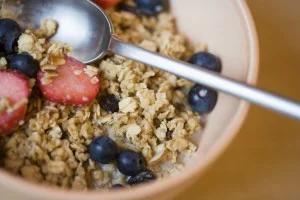
Wake up and eat your breakfast… then eat some more! Yes, you should eat, especially if you want to lose weight and stay healthy!

Wake up and eat your breakfast… then eat some more! Yes, you should eat, especially if you want to lose weight and stay healthy! It’s what you eat that makes all the difference to keep your body healthy and keep a steady metabolism to burn off the extra pounds that could put you at great risk for disease and even death.
66% of American adults are considered overweight or obese and at great risk of diabetes, heart attack, stroke and other diseases associated with extra weight putting undue stress on our bodies that lead to the leading causes of disease and death. Start on the path to good health now by adding texture, flavor, fiber, and nutrition and cutting fat in very simple ways and you will stay satisfied and see results quickly.
- BREAKFAST – Instead of a large muffin or a sausage, egg, and cheese sandwich with about 35g of fat…
- Opt for 2 bowls of bran cereal topped with fruit and skim or light soy milk and only 3g of fat or 2 eggs with fresh veggies, 2 slices of whole grain toast with jam and a glass of orange juice for only 12g of fat
- LUNCH – Instead of 1 slice of pepperoni pizza or a double cheeseburger with 32g of fat…
- Opt for A bowl of pasta with marinara sauce, zucchini, and a sprinkle of parmesan with a roll or a turkey sandwich on whole grain bread topped with mustard and fresh veggies, a side of fruit salad and a side of low-fat potato salad with a glass of water with lemon for only 7g of fat
- DINNER – Instead of macaroni and cheese or fried chicken with all the sides with 36g of fat…
- Opt for Veggie lasagna, a large green salad with fat free Italian dressing, a roll and a glass of wine for only 16g of fat or grilled chicken with barbecue sauce, a green salad, corn-on-the-cob, a baked potato and a glass of iced tea for only 494 calories and 6g of fat.
- SNACKS – Instead of regular potato chips with 30g fat…
- Opt for Lower fat baked chips or veggies with hummus dip for only 4g of fat
- DESSERT – Instead of a chocolate truffle or small slice of fruit pie for 14g fat or 1 cup premium ice cream with 36g fat…
- Opt for Sliced apples and fat-free chocolate dip or 4 cups lowfat frozen yogurt with fresh berries for less than 10g of fat
Enjoy!!!

Healthy Cheese?
With the vast majority of the American population, especially kids, lacking enough calcium for strong bones and teeth, it’s time to get creative and find flavorful new ways for your family to get the recommended daily amount.

With the vast majority of the American population, especially kids, lacking enough calcium for strong bones and teeth, it’s time to get creative and find flavorful new ways for your family to get the recommended daily amount. Even individuals who are watching their fat intake or lactose intolerant can benefit from eating cheese. Small amounts of cheese, which are easier to digest than milk due to the fermentation process, can provide large amounts of calcium. What better way to get your body strong than to enjoy some flavorful, delicate cheeses from around the world.
Cheese became popular around 4000 years ago when people started breeding animals and processing their milk to produce cheese, a great source of calcium and protein. Cheese is most commonly made from cows milk, however, there are varieties made from other mammals including sheep, goats, buffalo, reindeer, camels and yaks. One of the most nutritious cheeses in terms of low calories, high protein and calcium, is Romano cheese with 452 mg of calcium and only 165 calories per 1.5 ounces. Other good sources of calcium include: Swiss, part-skim ricotta, pasteurized process American, provolone, part-skim mozzarella and cheddar cheese.
Need a little more excitement and like to experiment with flavor? There are many varieties of cheeses, some with mild flavor, strong flavor, some soft, some hard, with flavors and textures for all palates. Check the yellow pages for cheese shops in your area or visit your local specialty market, supermarket or farmer’s market. Try samples, ask for recommendations, and enjoy. Cheese is great for entertaining, as a fondue, as a snack in your child’s lunch, or a mid-afternoon treat or appetizer before dinner. Be sure to store and serve cheese at recommended temperatures and choose cheeses for children, pregnant women and people with weaker immune systems that are pasturized. Most cheeses are; however some softer cheeses such as brie and cheeses in other countries, though flavorful and quite safe for adults in good health, can contain bacteria that can make some people ill.
Try cheese cubes as a snack or appetizer or cheese slices on crackers or in your favorite sandwich. Try shredded or grated cheese on fresh or baked pasta, in soups, salads or on vegetables. Remember a little goes a long way and you can mix flavors. Savor the taste and texture and enjoy with your favorite beverage!
Go Green for Earth Day and Every Day
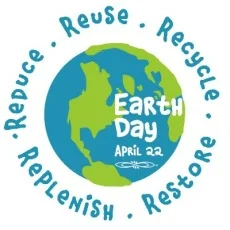
This Earth Day, April 22, 2009 will be the 39th celebration of green living and will be the beginning of The Green Generation Campaign™ to get billions to celebrate Earth Day not just on April 22, but every day. Their three core goals focus on finding renewable energy, responsible and sustainable consumption and the creation of millions of jobs.

This Earth Day, April 22, 2009 will be the 39th celebration of green living and will be the beginning of The Green Generation Campaign™ to get billions to celebrate Earth Day not just on April 22, but every day. Their three core goals focus on finding renewable energy, responsible and sustainable consumption and the creation of millions of jobs.
How will they accomplish their goals and what does this mean for you? It means by starting now, becoming educated about living green and doing your part, even a little at a time, we can all save money, stop using so much valuable land for trash, and learn to use alternative energy sources that are safer for the environment and may be less expensive.
Going green can ultimately use less energy, is less toxic, and often products are made from recycled materials which can continue to be recycled and reduce landfill space around the world. Green products may cost more up front, but are typically better for our health which can reduce our medical costs, they are proven to reduce our energy costs, and are often made from materials that reduce landfill waste, saving you money on the rising cost of trash pickup and land. That said, it pays to find ways to go green and set a good example for others while feeling good knowing you are doing your part. Here are a few ways to get started:
- Use the recycling bins from your trash removal service for all recycleable goods
- Buy energy star compliant electronics and appliances
- Replace light bulbs with compact fluorescent bulbs (not currently for use with a dimmer switch)
- Buy recycled paper products, rechargeable batteries, refillable pens, toner cartridges, and inks
Join the masses in big cities and small towns to celebrate Earth day 2009 this week. Enjoy some time outdoors with your friends and family and discover the many easy ways you can reduce, reuse, and recycle in your home, office, yard, while shopping and traveling. Start today and you can make the world a better place for all of us and generations to come.
Summer Vegetables
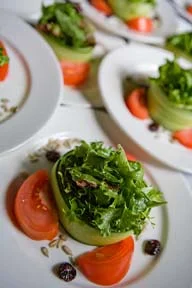
Summer is almost here and summer vegetables are beginning to arrive in your local supermarkets, specialty markets and farmer’s markets. Experts recommend consuming 5 servings* a day of fruits and vegetables to help reduce your risk of heart disease and cancer. Summer veggies are not only nutritious and delicious, they’ll help you look and feel your best by providing vitamin C, potassium, lutein, folate, iron, fiber, and essential hydration. Try one or more of these summer veggies today:
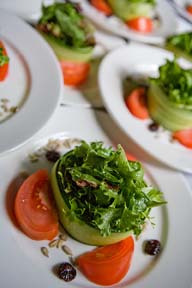
Summer is almost here and summer vegetables are beginning to arrive in your local supermarkets, specialty markets and farmer’s markets. Experts recommend consuming 5 servings* a day of fruits and vegetables to help reduce your risk of heart disease and cancer. Summer veggies are not only nutritious and delicious, they’ll help you look and feel your best by providing vitamin C, potassium, lutein, folate, iron, fiber, and essential hydration. Try one or more of these summer veggies today:
- Arugula
- Eggplant
- Potatoes
- Avocados
- Garlic
- Shallots
- Green Beans
- Kohlrabi
- Summer Squash
- Beans
- Mushrooms
- Swiss chard
- Beets
- Okra
- Tomatoes
- Collards
- Onions
- Zucchini
- Corn
- Sugar Snap Peas
- Cucumber
- Peppers
Try some of these ideas…
- Skip the chips which make you thirstier and opt for bright crunchy carrots and celery which are low in calories and fat and high in nutrients that will keep you feeling refreshed.
- Add some fresh veggies to your summer salad for a cool light meal packed with nutrients
- Load your baked potato or pasta with cooked veggies instead of butter or rich sauces or even toss with light olive oil or add to your favorite light sauces to give you flavor and energy on a hot summer day
* One serving of vegetables is equivalent to ¼ cup dry or one medium sized fresh vegetable such as a carrot or ¾ of a cup of juice or ½ cup cooked or 1 cup raw veggies.
Summer Fruits
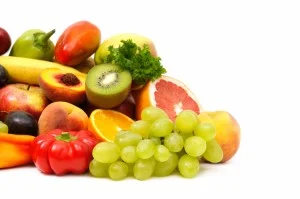
 Summer is just around the corner and summer fruits are beginning to arrive in your local supermarkets, specialty markets and farmer’s markets. Experts recommend consuming 5 servings* a day of fruits and vegetables to help reduce your risk of heart disease and cancer.
Summer is just around the corner and summer fruits are beginning to arrive in your local supermarkets, specialty markets and farmer’s markets. Experts recommend consuming 5 servings* a day of fruits and vegetables to help reduce your risk of heart disease and cancer.
Summer fruits are bright, smell sweet and come from exotic places, regional farms, and even your own backyard. They are not only good, they’re good for you - providing nutrients such as vitamins A, C, E, beta-carotene, magnesium, potassium, antioxidants, fiberand other nutrients as well as great hydration from fresh fruits to keep you looking and feeling your best. Try one or more of the following today:
- Apricots
- Figs
- Papayas
- Blackberries
- Gooseberries
- Peaches
- Cantaloupe
- Grapes
- Plums
- Casaba Melon
- Honeydew Melon
- Raspberries
- Cherries
- Lychee Nut
- Strawberries
- Crenshaw Melon
- Mangoes
- Waternelon
- Currants
- Nectarines
Be sure to pick unblemished fruits that show no signs of mold, bug infestation or are overly squishy. If you are uncertain how to choose fruits that are ready to be eaten, ask the produce manager or local farmer you are buying from – they will be glad to help you and will often offer you a sample to try.
For fun, healthy treats for the whole family, try:
- Adding sliced citrus fruits like lemon, lime, or orange to your still or bubbly water or making ice cubes from fruit juice rather than reaching for a soda.
- Try freezing seedless grapes or grabbing a handful of berries for a refreshing snack rather than candy.
- Adding sliced berries or a banana to your cereal or waffle for a refreshing summer breakfast.
- Adding fruits such as mangoes and berries to your salad for a sweet summer flavor.
- Serve freshfruits for dessert which are just as sweet but lower in fat than cakes and ice cream
* One serving of fruit is equivalent to ¼ cup dry or one medium sized piece of fresh fruit such as an orange or ¾ of a cup of juice.

Summer Celebrations - Rent or Buy?
Summer is almost here which means it’s time to plan that summer celebration – a graduation, birthday, the 4th of July, a wedding, or just a time to be with friends and family. Whatever your budget, you can have a great time if you look for great deals on food, furniture, decorations or whatever you might need.

Summer is almost here which means it’s time to plan that summer celebration – a graduation, birthday, the 4th of July, a wedding, or just a time to be with friends and family. Whatever your budget, you can have a great time if you look for great deals on food, furniture, decorations or whatever you might need. You can plan a potluck for simple celebrations and ask your guests to bring food, but if you are hosting a big event like a graduation or wedding or entertain often and want to be sure everyone has a good time and a comfortable place to sit, be sure to plan ahead. Whether you rent or buy, be sure to factor in time for finding the items you need as well as delivery and set-up.
Rental companies, which you can find online or in the yellow pages, supply everything from tables and chairs to plates and tablecloths.If you entertain often and have a place to store items you are not currently using, it is a better investment to purchase tables, chairs, serving pieces and everything else you need that you can continue to use. To determine whether to buy or rent, considering the following…
- What is your budget?
- What type of event and how formal?
- How many guests you will have and what age group?
- How often will you use the items?
- How much space do you have to work with?
- How much storage space do you have for the items while not in use?
- Do you prefer plastic, wood or other materials?
From here you can decide whether it makes sense to purchase stackable plastic chairs or rent and whether you will need tables and what kind, etc. By knowing your budget, type of event and the number of guests, it will be easy to determine what makes sense as costs vary by style and quantity. For informal gatherings, many people will stand which means you don’t need a table and chair to seat every guest; however formal gatherings require more formal seating. Additionally, consider time and weather. How long will people be seated? Will they be outside and in what type of weather? Opt for more comfortable seating surfaces for events that require sitting for long periods and if outdoors keep in mind that metal chairs can get very hot and fabric or wood chairs stay wet after rain. Also consider umbrellas or tents for outdoor shade during the day.There are many other factors to consider when entertaining, but start with making sure your guestsfeel comfortable and welcome.

Bone Up on Calcium
 Did you know that May is National Osteoporosis Prevention and Awareness Month? Why not start now and learn about why calcium is so important for us throughout our lives and where to find it. Calcium is the most abundant mineral in our bodies, with 99‰ stored in our bones and teeth, functioning to keep them strong. The rest is found throughout the body in blood, muscle, and the fluid between cells.
Did you know that May is National Osteoporosis Prevention and Awareness Month? Why not start now and learn about why calcium is so important for us throughout our lives and where to find it. Calcium is the most abundant mineral in our bodies, with 99‰ stored in our bones and teeth, functioning to keep them strong. The rest is found throughout the body in blood, muscle, and the fluid between cells.
Calcium is needed for muscle contraction, blood vessel contraction and expansion, the secretion of hormones and enzymes, and sending messages through the nervous system. A constant level of calcium is maintained in body fluid and tissues for these vital body processes to function.
Bones constantly go through a process of breakdown and new formation. The balance changes as people age. Kids, have more bone formation and less breakdown and aging adults, especially postmenopausal women, experience more bone breakdown than formation, resulting in bone loss and risk for osteoporosis, a disorder characterized by porous, weak bones that break easily.
Amount of Calcium
What is the recommended daily amount of calcium?
| Age | Calcium (mg/day) | Pregnancy & Lactation |
|---|---|---|
| 0 to 6 months | 210 | N/A |
| 7 to 12 months | 270 | N/A |
| 1 to 3 years | 500 | N/A |
| 4 to 8 years | 800 | N/A |
| 9 to 13 years | 1300 | N/A |
| 14 to 18 years | 1300 | 1300 |
| 19 to 50 years | 1000 | 1000 |
| 51+ years | 1200 | N/A |
n the United States, milk, yogurt and cheese are the major sources of calcium. The U.S. Department of Agriculture’s Food Guide Pyramid recommends that people two years and older eat 2-3 servings of dairy products per day such as: 1 cup (8 fl oz) of milk, 8 oz of yogurt, 1.5 oz of natural cheese (ie Cheddar), or 2.0 oz of processed cheese (ie American).
Non-fat and reduced fat dairy products containing the same amount of calcium are available for individuals concerned about saturated fat content from regular dairy products. For individuals with lactose intolerance and those who are vegan, foods such as Chinese cabbage, kale and broccoli are alternative calcium sources. Additionally, there are many calcium-fortified food sources, including fruit juices, tofu and cereals. Certain vegetables contain substances which can reduce calcium absorption, so you may have to eat several servings of spinach to obtain the same amount of calcium in one cup of milk, which is not only calcium-rich but also contains calcium in an easily absorbable form.
Food Sources of Calcium
| Food | Calcium (mg) | ‰ DV |
|---|---|---|
| Yogurt, plain, low fat, 8 oz. | 415 | 42‰ |
| Yogurt, fruit, low fat, 8 oz. | 245–384 | 25‰-38‰ |
| Sardines, canned in oil, with bones, 3 oz. | 324 | 32‰ |
| Cheddar cheese, 1 ½ oz shredded | 306 | 31‰ |
| Milk, non-fat, 8 fl oz. | 302 | 30‰ |
| Milk, reduced fat (2‰ milk fat), no solids, 8 fl oz. | 297 | 30‰ |
| Milk, whole (3.25‰ milk fat), 8 fl oz | 291 | 29‰ |
| Milk, buttermilk, 8 fl oz. | 285 | 29‰ |
| Milk, lactose reduced, 8 fl oz. | 285-302 | 29-30‰ |
| Mozzarella, part skim 1 ½ oz. | 275 | 28‰ |
| Tofu, firm, made w/calcium sulfate, ½ cup | 204 | 20‰ |
| English Muffin | 204 | 20‰ |
| Orange juice, calcium fortified, 6 fl oz. | 200-260 | 20-26‰ |
| Salmon, pink, canned, solids with bone, 3 oz. | 181 | 18‰ |
| Pudding, chocolate, instant, made w/ 2‰ milk, ½ cup | 153 | 15‰ |
| Cottage cheese, 1‰ milk fat, 1 cup unpacked | 138 | 14‰ |
| Tofu, soft, made w/calcium sulfate, ½ cup | 138 | 14‰ |
| Spinach, cooked, ½ cup | 120 | 12‰ |
| Instant breakfast drink, various flavors and brands, powder prepared with water, 8 fl oz. | 105-250 | 10-25‰ |
| Frozen yogurt, vanilla, soft serve, ½ cup | 103 | 10‰ |
| Ready to eat cereal, calcium fortified, 1 cup | 100-1000 | 10‰-100‰ |
| Turnip greens, boiled, ½ cup | 99 | 10‰ |
| Kale, cooked, 1 cup | 94 | 9‰ |
| Kale, raw, 1 cup | 90 | 9‰ |
| Ice cream, vanilla, ½ cup | 85 | 8.5‰ |
| Soy beverage, calcium fortified, 8 fl oz. | 80-500 | 8-50‰ |
| Almonds, 1 oz | 80 | 8‰ |
| Chinese cabbage, raw, 1 cup | 74 | 7‰ |
| Tortilla, corn, ready to bake/fry, 1 medium | 42 | 4‰ |
| Tortilla, flour, ready to bake/fry, one 6” diameter | 37 | 4‰ |
| Sour cream, reduced fat, cultured, 2 Tbsp | 32 | 3‰ |
| Bread, white, 1 oz | 31 | 3‰ |
| Broccoli, raw, ½ cup | 21 | 2‰ |
| Bread, whole wheat, 1 slice | 20 | 2‰ |
| Cheese, cream, regular, 1 Tbsp | 12 | 1‰ |
You can also visit www.CDC.gov/powerfulbones for fun bone building exercises and recipes for you and your kids.